
Latika Bolar
22-Jun-2026
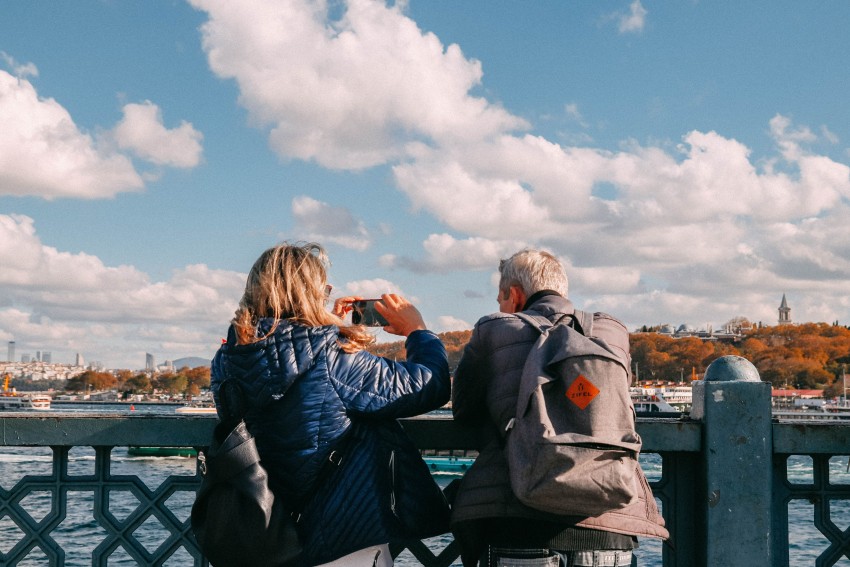
As Indian travellers move beyond checklist tourism, travel is increasingly becoming a reflection of identity, intention, and personal values.
Inputs by: Latika Bolar, Chief Business Officer, EBIX Corporate Travel
Travel has always carried meaning. People have crossed oceans and mountain passes for trade, faith, family, and curiosity for as long as there have been roads to walk. What is different today is not the act of travelling — it is what that act now carries with it. Somewhere in the last decade, a journey stopped being just a journey and became a statement.
The Shift Nobody Announced
There was no single moment when Indian travellers collectively decided that travel would become personal. It happened gradually, through a thousand small choices. Someone opted for a heritage haveli over a business hotel. A family chose a week in one place over a rushed five-city itinerary. A couple booked a curated local experience rather than a standard sightseeing package. None of these choices were accidental. Each reflected something about how that person sees themselves and the kind of life they are trying to live.
The Numbers Confirm it
India's travel demand is real, broad, and growing. Domestic tourist visits touched a record 3.03 billion between January and August 2025, per Ministry of Tourism data. Foreign arrivals reached 9.02 million in the same period. But the more significant story isn't volume – it's intent.
Indians across income segments are making more deliberate travel choices. The traveller who once booked the cheapest flight and the most centrally located hotel is now asking a different set of questions: What will this trip feel like? What will I come back with? Will it reflect who I am? These questions are quietly reshaping the industry.
Convenience is no Longer the Whole Story
For years, the dominant logic in travel was optimisation — shortest route, best rate, maximum sights in minimum time. That logic made sense when travel itself was aspirational enough and simply getting there was the point.
That era isn't entirely over, and in a price-sensitive market like India it never will be. But it no longer explains what travellers do when they have the freedom to choose. A young professional picks a destination because it lets her work remotely part of the week and explore at her own pace. A family chooses a private itinerary over a group tour because they want the trip to feel like theirs. A senior traveller prioritises service assurance and familiar food over novelty.
Each of these is a different expression of the same underlying shift: travel has become meaning-led.
This is also why formats like luxury trains, heritage circuits, wellness retreats, and cultural trails are gaining genuine traction. They treat the journey itself as the experience — not merely the means of getting somewhere. A premium rail journey works precisely because the scenery, the pace, the service, and the storytelling built into the route become the holiday. That is a fundamentally different proposition from selling a destination.
Slower, More Conscious, More Real
A growing number of travellers are choosing to slow down — not because they are travelling less, but because they are becoming more selective about what each trip is for. The growth of spiritual, heritage, and cultural travel in India reflects this. The government's Swadesh Darshan 2.0 framework has explicitly recognised this direction, emphasising sustainable and responsible tourism across culture, heritage, ecotourism, and the Vibrant Villages Programme. These are not niche interests — they are signals of a mainstream appetite for depth over speed.
People want to return from a trip with something more than photographs. They want to understand the food, the architecture, the local craft, and the history of a place. They want participation, not just consumption.
There is a social dimension to this worth acknowledging. Destination choices, travel formats, and the kind of experience someone seeks have become part of how people present themselves and their values. Intentional living, quality over quantity, curiosity over comfort – these are values that travel choices now communicate as clearly as any other lifestyle marker.
This is not about luxury in the conventional sense. It is about relevance. A traveller may spend significantly on a guided food walk or a night in a carefully restored heritage property — not because it is expensive, but because it is exactly the kind of thing they want their life to include. That is a very different purchasing logic than simply upgrading to business class.
What the Industry must Reckon with
Take Rajasthan. For one traveller it is a heritage circuit, for another, a luxury wedding destination; for a third, a photography journey; for a fourth, a family road trip. The destination is the same. The journey each person wants is entirely different. Reading that difference and designing accordingly — at scale — is genuinely hard.
Technology will help with the logistics. Platforms can manage bookings, payments, and itineraries more efficiently than ever. But the emotional intelligence required to understand what a particular traveller actually values cannot be automated. It comes from genuine curiosity about people and a real investment in understanding what travel means to them.
The modern traveller is no longer just asking where to go. The question has shifted to something more personal: what kind of journey feels right for who I am right now? That is harder to answer than a price comparison — and it is the question the best in this industry will learn to answer well.
Cover Credits: Pexels