
Maj Gen (Dr) Rajesh Chopra
31-Aug-2026

As the brown spirits market matures, the next frontier is not merely production, but consumer understanding.
By Maj Gen (Dr) Rajesh Chopra, AVSM (Retd), Director General, The Indian Malt Whisky Association (IMWA)
Capital follows the palate. India's brown spirits market is proving the point, as years of steady investment in quality and craftsmanship reshape the country's premium whisky landscape. According to the latest data released by the Confederation of Indian Alcoholic Beverage Companies (CIABC), Indian single malt whisky sales are estimated to have reached approximately 5 lakh cases in 2025, registering 22 per cent year-on-year growth. Homegrown distillers account for an estimated 92 per cent of the Made-in-India single malt category, reflecting growing consumer confidence in Indian craftsmanship and premium spirits. The category has expanded from around 3.5 lakh cases in 2023 to 4 lakh cases in 2024, and now 5 lakh cases in 2025, underscoring sustained premiumisation and rising appreciation for Indian single malts. As the market matures, the next frontier is not merely production, but consumer understanding.
Why Does the Indian Glass Behave Differently?
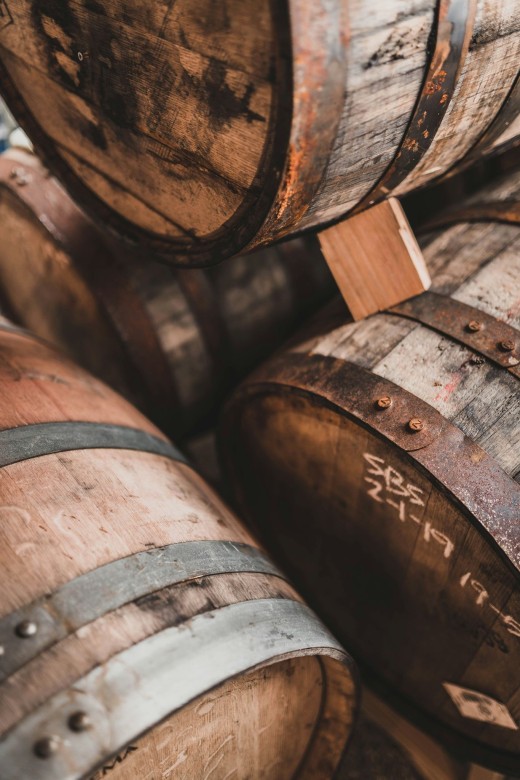
Climate is the first teacher. Whisky matured in Indian conditions develops with an intensity Scottish warehouses never see, as tropical heat increases interaction between spirit and oak while pushing evaporation losses to 8% to 12% annually far beyond the 2% a Scottish cellar surrenders each year. Concentration is the practical consequence. An Indian malt at five or six years can display the oak depth, dried fruit weight, and spice register of a considerably older Scotch, which is why age statements deserve context rather than reverence. The discerning beginner stops asking how old a whisky is and starts asking what cask and climate have done to it. That question is best answered with a method.
A Method Built for Indian Conditions
Glassware comes first. A tulip-shaped glass funnels aroma toward the nose, and the nose does most of the work. Approach it gently, lips slightly parted, three short passes rather than one deep inhale that only registers ethanol. On the palate, the first sip merely calibrates. The second sip is informed, held for several seconds so sweetness, spice and grain can separate. A few drops of water matter even more here than in cooler markets, since many Indian malts are bottled at strengths above 55 per cent, and dilution unlocks the tropical fruit, jaggery sweetness and six-row barley character that alcohol otherwise masks. Ice remains a choice, not a sin, though it mutes precisely the complexity the premium price paid for.
That complexity is best met as a progression rather than a single impression, a whisky revealing itself in movements much as a piece of music does. On the palate a good Indian malt tends to open sweet and generous, with jaggery, honey or ripe banana, the tropical warmth of its maturation having coaxed a roundness that cooler-climate spirits rarely show so young. As it settles, the middle firms up and the structure declares itself, spice and oak stepping forward together as cardamom, clove, roasted cashew and a warm thread of tannin, sometimes with a curl of woodsmoke or dark toffee beneath. This is where patience is rewarded, for a malt held a moment longer keeps unfolding, the oak and spice deepening as the early sweetness recedes and secondary notes the first taste only hinted at begin to surface. Everything then gathers in the finish, the truest measure of the whisky.

A fine malt does not simply stop; it lingers and keeps evolving after the swallow, drying slowly from fruit into spice and on into smoke, leather or dark chocolate, and holding for the better part of a minute or more, where a lesser one fades fast, thins out or turns harsh with heat. Length and grace at this stage say more about how a whisky was made, and how honestly it was matured, than any age statement ever can. All that remains is to name what you have found, and here the Indian pantry is a richer reference library than any imported tasting wheel. Notes read far more honestly as saffron, cardamom, roasted cashew, ripe banana or gur than as heather or shortbread, and a taster who reaches first for the flavours of home describes what is truly in the glass rather than what a foreign chart insists ought to be. A palate that trusts its memory tastes with authority, and that authority, multiplied across millions of consumers, becomes market discipline.
From Ritual to Category Discipline
Taste literacy is consumer protection by another name. A drinker who can recognise an authentic malt, made from nothing more than water, yeast and malted barley, distilled in copper pot stills and matured patiently in oak, becomes the category's most credible guardian against the spurious and the merely dressed up. Markets reward that vigilance with truthful labelling, transparent ageing and sustained premiumisation. The industry's obligation is to protect, preserve and promote a world-class category based on provenance. The consumer's obligation is simpler and more pleasurable. Learn to taste what India now makes, and judge it, glass in hand, entirely on its own terms.
All image credits: Unsplash