
Neha Mehrotra
22-May-2026
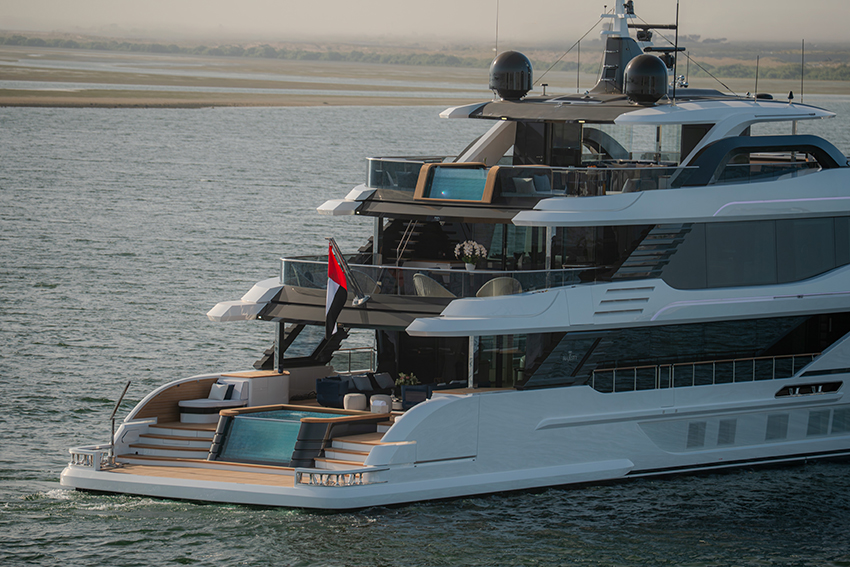
Gulf Craft CEO Erwin Bamps discusses the launch of the Majesty 145, evolving yacht lifestyles and the growing demand for privacy, wellness and personalised luxury on water.
Majesty Yachts, a subsidiary of Gulf Craft, a global manufacturer of luxury yachts, is not new to pleasure vessels and superyachts. However, the Majesty 145 first revealed and sold during the 2025 Dubai International Boat Show, shakes up a few things!
Already holding an important place within Gulf Craft’s portfolio, the model progressed from concept unveiling to launch and preview in a little over a year. And as the first hull of the new Majesty 145 officially launches, it marks a key milestone in her build journey. With a six-cabin layout, which is rare and typically reserved for larger superyachts, a distinct exterior styling and a strong focus on owner lifestyle, the yacht makes the entire new generation of Majesty superyachts stand out on an international stage.
In a conversation with PEAKLIFE, Gulf Craft CEO Erwin Bamps shares the evolution of the Majesty line, the design approach and a shift in what today’s yacht owners want.

(Gulf Craft CEO Erwin Bamps)
Q1. The Majesty 145 seems to mark a turning point—what does this launch represent for the brand’s long-term vision?
The Majesty 145 represents an important step in the continued evolution of the Majesty brand. Over the years, we have developed increasingly sophisticated superyachts. At the same time, the new 145 introduces a very distinct exterior styling at the hands of Cristian Gatto Design that will make the entire new generation of Majesty superyachts stand out on an international stage.
This new generation superyacht in the 40-metre-plus segment brings advanced engineering and meticulous detailing, with semi-personalised interiors, proudly engineered and crafted in the United Arab Emirates for yachting enthusiasts around the world.

Q2. You’ve spoken about the “evolution” of the Majesty line—what has fundamentally changed in how you approach design today versus a decade ago?
A decade ago, the industry was largely focused on hardware and performance specifications, dimensions and visible features. Today, the approach has become far more experience-led, centred around how owners actually want to live, move and spend time onboard.
We now place much greater emphasis on lifestyle, comfort, privacy, flow between spaces and the overall feeling a yacht creates over extended periods onboard. Owners today are not simply evaluating a yacht based on size or performance alone but also on how seamlessly it supports their way of living and entertaining.
At the same time, we have embraced a much higher level of personalisation and flexibility. Owners increasingly want their yachts to reflect their personality and preferences, whether through layouts, materials or specific onboard features. Our role is to offer that flexibility while still maintaining an efficient semi-production manufacturing approach, a coherent design language and the identity that defines a Majesty yacht.
Q3. Can you take us through the design of the yacht? What are some standout features?
The Majesty 145 was designed by Cristiano Gatto Design in collaboration with our in-house design team. From the very beginning, the objective was to create a yacht that feels far larger than its size while maintaining elegance, balance and practicality throughout.
One of the standout features is the integration of two infinity-style pools, one on the main deck and another on the sundeck, which is something typically reserved for much larger superyachts. The yacht also incorporates a six-cabin layout, which is quite rare within this size category and reflects a very considered approach to space planning and liveability.

There is also a strong emphasis on the connection between the interior and exterior spaces. Floor-to-ceiling glazing, open circulation and seamless transitions throughout the yacht create a much more open and relaxed onboard atmosphere.
Wellness was another important element of the design. The owner’s suite includes an infrared sauna, while the upper deck integrates a fully equipped gym and dedicated wellness areas designed for longer stays onboard.
Q4. Are you seeing a shift in what today’s yacht owners prioritise—wellness, social spaces, or something else?
Wellness and liveability have become increasingly important in the way owners approach yachting today. People are spending longer periods onboard, often with family and friends, which has created a far greater emphasis on comfort, privacy, quieter environments and a stronger connection to the sea. In many ways, today’s high-net-worth clients are no longer simply buying a yacht. They are investing in an experience and a lifestyle that offers greater freedom, flexibility and peace of mind.
At the same time, after-sales service and long-term maintenance support have become increasingly important considerations. Owners today expect strong support infrastructure, responsiveness and the reassurance that their yacht will continue to be properly maintained and supported long after delivery.
Another noticeable shift is the expectation around delivery timelines. Owners are less willing to wait several years while still expecting an exceptional level of finish and attention to detail. This is an area where Majesty has demonstrated strong capability. The Majesty 145, for example, moved from concept announcement to launch in just 14 months, which is a significant achievement at this level.
Q5. What’s your definition of luxury?
For me, true luxury is not about excess. It is about quality, comfort, craftsmanship and peace of mind. It is about creating an environment where everything feels effortless and where the owner can genuinely enjoy their time onboard.
I also believe luxury is closely connected to time. In today’s world, time and privacy are becoming increasingly valuable, and yachts provide a unique opportunity to step away from noise and reconnect with family, nature and yourself.

Q6. What’s next for you?
We are expanding our portfolio, investing further into our production capabilities and strengthening our global aftersales and service infrastructure. As the yachts themselves become more advanced, the ownership experience becomes equally important.
Technology will also continue to play a major role in shaping the future of the industry. We are already exploring greater integration of AI-enhanced systems and processes across different areas of the business, from design optimisation and smarter engineering processes to onboard systems and predictive maintenance. The objective is not to remove the human element, but to enhance efficiency, reliability and the overall ownership experience.
At the same time, sustainability and efficiency remain important priorities. We continue to invest in more efficient hull designs, smarter energy management systems and more responsible material selection across our operations.
But despite all the technological progress, I still believe this industry remains very human. Understanding how owners live, travel and spend time onboard will always remain at the centre of what we do.