
Pranjal Shah
15-Apr-2026
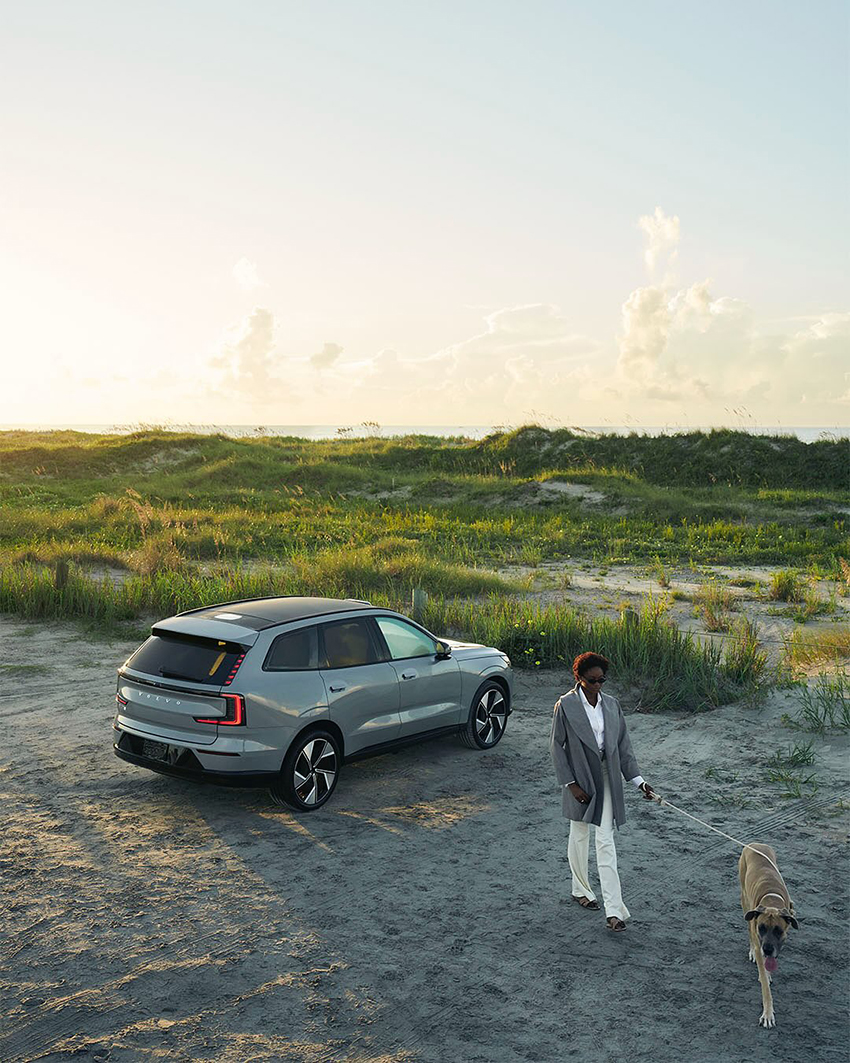
As fashion and mobility converge, collaborations are moving toward immersive, experience-led luxury.
Two fields building on the cusp of research, innovation and design, automobiles and couture have much in common. Both employ visionary creation to deliver cutting-edge technology, stylish ease and satisfaction. Where the automotive industry bleeds creativity in its use and advancement of technology, the world of fashion uses technology to fuel creation. Thus, when the two join hands, the result is a dynamic wonder of precision, novelty and composition.
The relationship between automotive and fashion is quite old, with partnered craftsmanship dating back to the 1920s. The association has continued to grow over the years, from automobiles dressed in Gucci red and green to Sergio Hudson’s Volvo-inspired clothing to Formula One races glinting with Louis Vuitton’s ‘LV’. As these collaborations evolved from craft-focused partnerships to cultural statements and lifestyle ecosystems, they began redefining what luxury looks like across industries — tracing a journey that reflects how fashion and automobiles have shaped one another over time.
1. Century-Old Origins: Hermès x Bugatti (1920s)
Long before fashion and automotive brands began collaborating for marketing visibility, Hermès and Bugatti were already working together in the early 20th century. The relationship was centred around Hermès supplying leather interiors and accessories for Bugatti vehicles, including custom upholstery, luggage pieces, and interior detailing — all executed using Hermès’ artisanal leatherworking techniques. The modern fashion-automotive collaborations thus stem from luxury craft relationships rooted in technical expertise and shared design philosophy prioritising meticulous design, material quality, and aesthetic refinement.
Beginnings of the Modern Collaborations
The combined craftmanship of the early years paved the way for closer partnerships that extended beyond interiors and bespoke detailing into branding and market positioning. By the last quarter of the 20th Century designers were no longer simply contributing their artisanal expertise; they were lending their identities to entire automobile models. Limited editions, signature colourways and co-branded styling emerged as manufacturers sought to attract new audiences and elevate desirability. These early branding-focused collaborations marked the beginning of a new era where fashion and automobiles converged not just in craft but in visibility, storytelling and cultural appeal.
2. AMC Javelin Pierre Cardin Edition (1972)
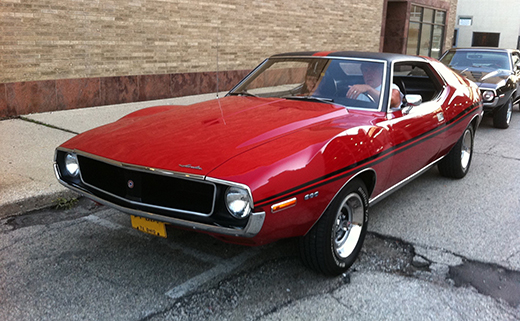
(By CZmarlin — Christopher Ziemnowicz)
Pierre Cardin began operations in the 1950s, imbuing a futuristic, space-themed aesthetic in ‘60s fashion. Known for his bold colour choices and geometric motifs, he had established himself on the fashion landscape around the time American Motors Corporation (AMC) began experimenting with fashion-themed cars in the 1970s. This collective understanding of the commercial potential of pioneering collaborations and cross-industry branding culminated in the introduction of the AMC Javelin Pierre Cardin Edition in 1972. The design reflected Cardin’s avant-garde aesthetic with bold geometric fabric, multi-coloured pleated upholstery and branded interior badges, positioning a performance-orientated car as a consumable style object.
3. Cadillac Seville Gucci Edition (1978)
As Gucci sought to expand its global influence following a successful collaboration with American Motors Corporation, Cadillac was attempting to modernise its image in order to attract younger buyers. The collaboration between the two brands resulted in a limited-edition version of the Cadillac Seville Gucci Edition released in 1978. The partnership included bespoke Gucci-designed interior trim, gold-plated Gucci badges, special pinstriping, tailored upholstery that echoed the brand’s leather-goods and luggage aesthetic, and custom exterior badging with Gucci’s signature green-red-green accents. The collaboration also reflected broader cultural trends of the late 1970s, when designer branding was becoming increasingly visible across industries. Gucci’s involvement helped elevate the Cadillac Seville’s luxury appeal, while Cadillac provided Gucci with a new platform for brand exposure.
4. MINI Paul Smith Edition (1998)
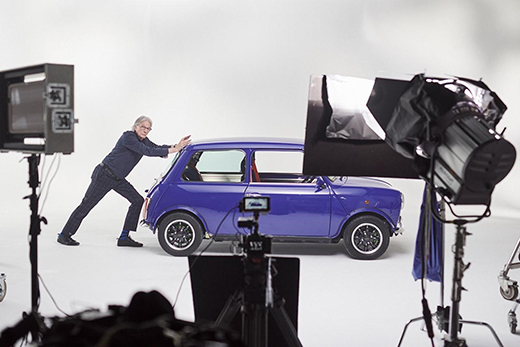
(Image Credits: Mini Cooper)
The 1998 MINI Paul Smith Edition is widely regarded as the first major designer tie-up with a small, accessible car. Paul Smith took the classic Mini Cooper 1.3 and reimagined it in a bespoke deep-blue shade (now called “Paul Smith Blue”), applying his signature colour-blocking and minimalist graphic language to the exterior and interior. Unlike earlier collaborations, the Mini Paul Smith emphasised subtle design cues rather than heavy branding. The car debuted at the 1998 Tokyo Motor Show and immediately became a design icon, later spawning anniversary versions and electric reinterpretations such as the MINI Recharged by Paul Smith. The partnership also demonstrated a shift in fashion-automotive collaborations toward design-driven storytelling, which would later define modern collaborations.
Shifting Modern Partnerships
As fashion-automotive collaborations matured, the scope of these partnerships expanded beyond limited-edition vehicles and co-branded models. Rather than focusing solely on the automobile, collaborations began to encompass bespoke luggage collections tailored to vehicle design, fashion pieces inspired by automotive materials, and even partnerships within motorsport, the pinnacle of automotive innovation. These evolving partnerships have signalled a move from product-centric collaborations to multi-dimensional brand ecosystems where mobility, fashion and culture intersect to create experiences that encompass a broader opulent lifestyle.
5. Bugatti Veyron Fbg par Hermès (2008)
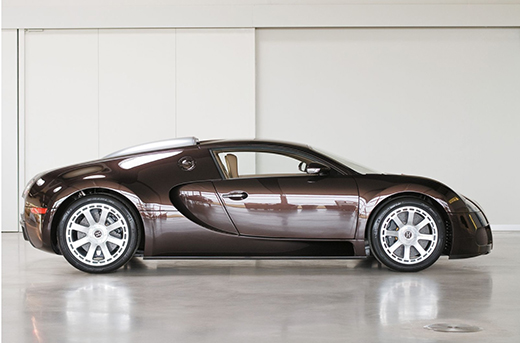
(Image Credits: Bugatti)
When Bugatti and Hermès reunited in 2008, the collaboration was framed not as a novelty but as a continuation of a relationship that dated back to the 1920s. The Bugatti Veyron Fbg par Hermès, unveiled at the Geneva Motor Show in 2008, represented one of the most sophisticated fashion-automotive collaborations of the modern era. Hermès designers worked closely with Bugatti engineers to design the interior from scratch, specifying bespoke leather in signature Hermès colours, stitching patterns, and small details like embossed logos, while Bugatti retained the Veyron’s extreme performance and engineering. The collaboration also extended to custom luggage sets designed to fit perfectly within the Veyron’s storage space.
6. Fiat 500 by Gucci (2011)
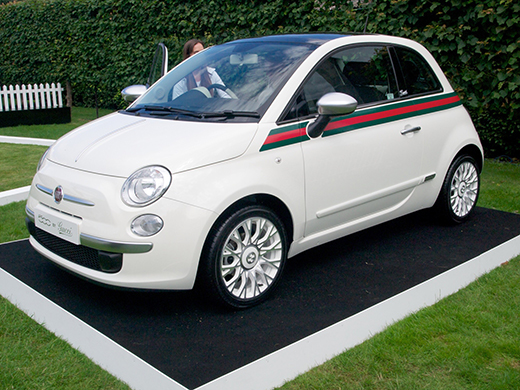
The Fiat 500 by Gucci has been hailed as one of the most successful fashion-automobile collaborations of the modern era. The fact that it celebrated both Gucci's 90th anniversary and Italy’s 150th anniversary of unification also made it a symbolic fusion of Italian design heritage. The limited-edition model featured Gucci’s signature green-red-green stripes, chrome Gucci badges, and special 16-inch alloy wheels. Inside, the car included two-tone leather seats embossed with the interlocking “GG” logo, branded seatbelts, and Gucci detailing across interior elements such as carpets, gear lever, and key fob. To complement the vehicle, Gucci released a full lifestyle collection, including travel accessories, leather goods, apparel, sunglasses, and watches.
7. BMW i8 Luggage Collection by Louis Vuitton (2014)
(Image Credits: BMW)
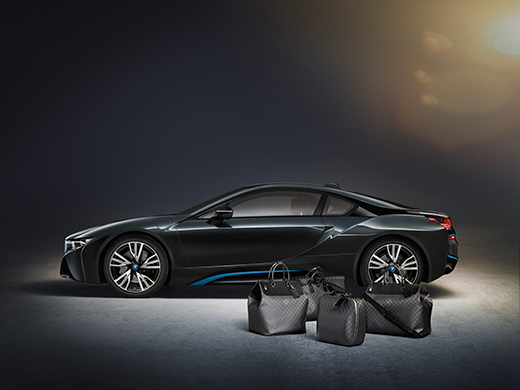
BMW partnered with Louis Vuitton to create a bespoke luggage collection designed specifically for the BMW i8. The luggage set was developed to complement the futuristic plug-in hybrid sports car and maximise its storage space. The collection consisted of two travel bags, a business case, and a garment bag, each custom-tailored to fit perfectly within the BMW i8’s rear compartment. The luggage incorporated carbon-fibre-inspired materials, echoing the BMW i8’s lightweight construction and advanced engineering. Louis Vuitton’s heritage as a trunk manufacturer also played a key role.
8. Phantom Oribe by Rolls-Royce (2021) x Hermes
(Image Credits: Rolls-Royce)
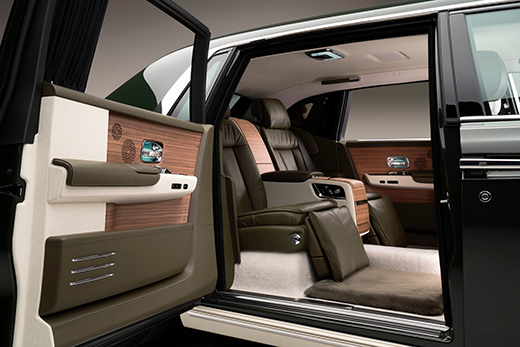
The Phantom Oribe was unveiled by Rolls-Royce for Japanese entrepreneur Yusaku Maezawa. The project brought together Rolls-Royce’s bespoke division in Goodwood and Hermès artisans in Paris, creating a vehicle that married automotive engineering with haute craftsmanship. The car’s exterior featured a unique two-tone finish in Oribe Green and cream. Inside, Hermès leather and craftsmanship defined the interior. Designers from both brands collaborated to create custom materials, stitching, and trim elements reflecting Hermès’ artisanal heritage. The collaboration also included bespoke artwork and handcrafted detailing throughout the cabin.
9. Volvo Inspired Capsule Collection by Sergio Hudson (2025)
(Image Credits: VOLVO)
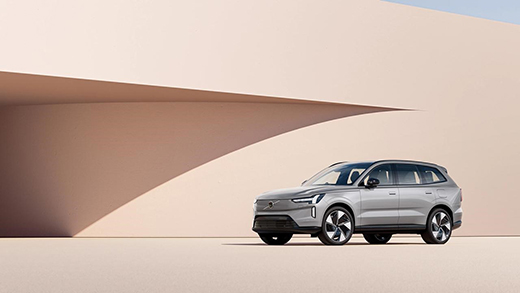
In 2025, Volvo Cars partnered with fashion designer Sergio Hudson to create a limited-edition wearable collection inspired by the Volvo EX90. The collaboration was launched to celebrate Volvo’s 70th anniversary in the United States. Hudson designed a limited-edition car coat and belt, drawing inspiration from materials used in the EX90’s interior. The pieces incorporated Volvo’s minimalist Scandinavian design language alongside Hudson’s signature tailoring and bold silhouettes. Hudson also created a three-look Capsule Collection that pairs each of the collaboration’s items with existing garments in his fashion line. This was one of the handful of collaborations which represented a shift from vehicle-focused partnerships to fashion pieces inspired by automotive design.
10. LVMH x Formula One (2025)
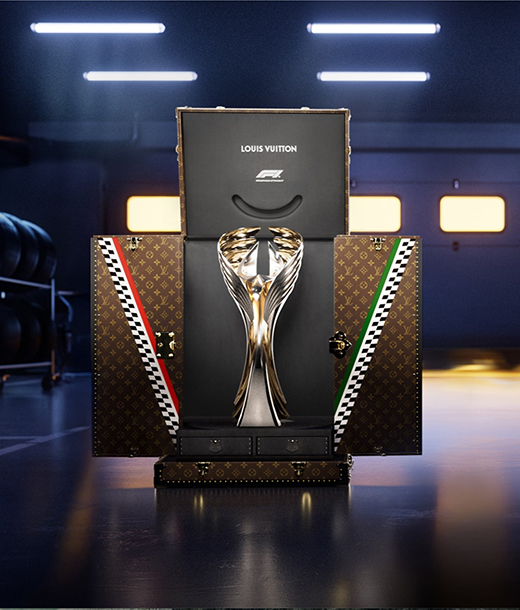
2025 also saw the culmination of a major 10-year global partnership between Formula 1 and luxury conglomerate LVMH. The agreement brought multiple LVMH brands, including Louis Vuitton, TAG Heuer, and Moët Hennessy, into Formula 1, marking one of the largest luxury-sport collaborations in recent years. Louis Vuitton’s role centred on creating bespoke trophy trunks for Grand Prix races, continuing its long-standing tradition of crafting trophy cases for major sporting events. The partnership also included title sponsorship of the 2025 Australian Grand Prix, trackside branding, hospitality experiences, and podium presentations, marking Louis Vuitton’s most visible involvement in motorsport to date.
As the scope widens, fashion and automotive collaborations are poised to become even more expansive and experiential. What began as shared craftsmanship has evolved into branding partnerships, lifestyle extensions and global sporting alliances, and the next phase is likely to move further into technology, sustainability and immersive experiences.
Cover Credits: Instagram @volvocarusa