
Roxanne Bamboat
08-Oct-2025
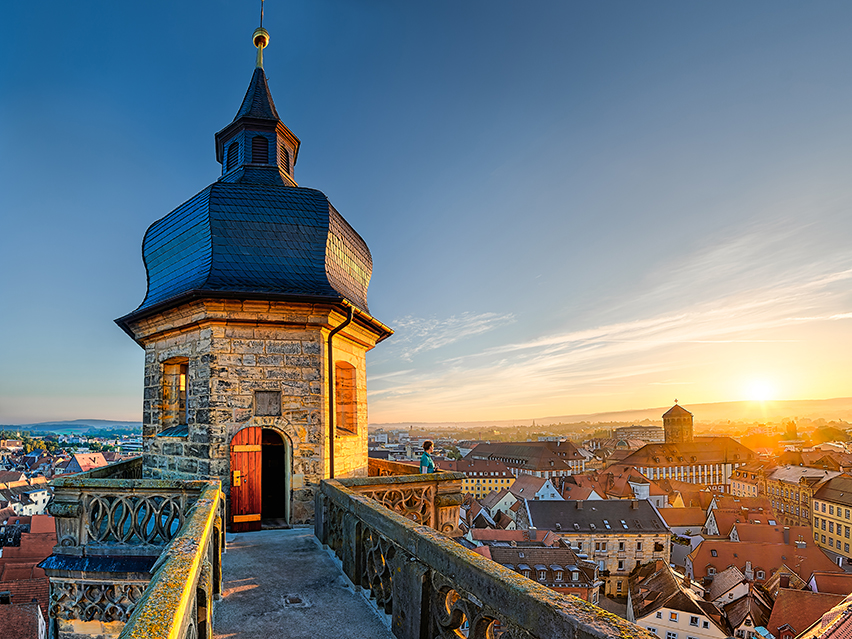
Discovering Germany’s many cultural landmarks through the smaller Bavarian town of Bayreuth.
When you think of Germany, it’s usually the big cities like Berlin, Hamburg or Munich that catch a traveller’s attention. All that glorious history, multiple tourists trotting through and fun attractions make them hard to resist. It feels as if all the German charm is trapped in these big cities but the truth is oftentimes, real German treasure is in the smaller towns.
Nestled in northern Bavaria lies the cultural city of Bayreuth. It’s often skipped and usually doesn’t even feature in a traveller’s itinerary. While Bayreuth is quieter and smaller than the usual suspects, it is incredibly charming and brimming with cultural heritage.
Bayreuth’s claim to fame is its immensely sought-after Wagner Festival that celebrates the work and musical compositions of the famous music composer Richard Wagner. However, this intimate town has more to offer its tourists than just opera. Bayreuth is full of elegance, lush baroque architecture and a stunning devotion to brewing local Franconian beer.
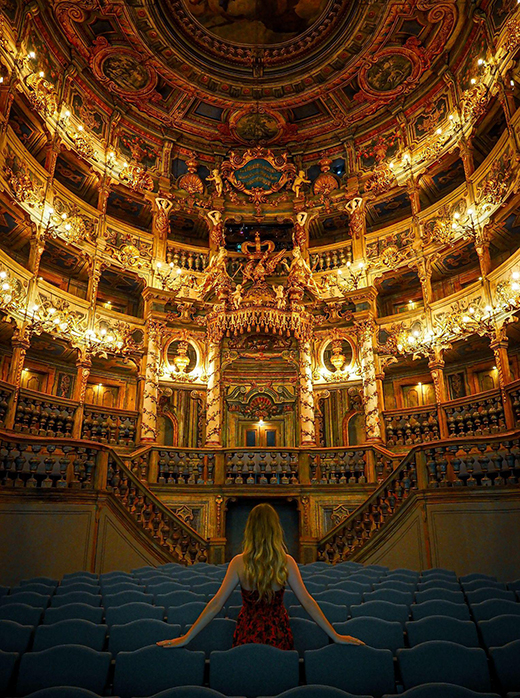
(Margravial Opera House, Credits: Melanie Lisitano)
Spend a few days in Bayreuth discovering its offerings and you’ll experience the real charm of Germany. Since the resident celebrity in Bayreuth was the composer Richard Wagner, it’s safe to say sightseeing in this musical city should begin at the stunning Margravial Opera House. The opera house was christened a UNESCO world Heritage site in 2012 and rightly so. Set foot into this theatre and it’s a feast for your eyes with stunning baroque-style interiors. Margravine Wilhelmine of Brandenburg-Bayreuth was an avid music and theatre lover. She had this theatre built for the lavish festivities surrounding the wedding of her daughter, the Bayreuth princess Elisabeth Friedericke Sophie and duke Carl Eugen of Württemberg in September 1748. This gilded theatre has ornate wooden carvings, captivating acoustics that impressed nobility of the time and a detailed hand-painted ceiling. Even today, music enthusiasts flock to the theatre to enjoy performances and it’s a treat to be seated in a beautiful hall built nearly 300 years ago.
The Margravine Wilhelmine was a force to reckon with in Bayreuth and it is thanks to this queen that the city has treasures like the Opera house and the Hermitage gardens.
In 1715 Margrave (prince) Georg Wilhelm built the old palace near the residential town of Bayreuth as the central feature of a court hermitage. In 1735, when margrave Friederich took over the government, he presented the Hermitage to his wife, Wilhelmine.
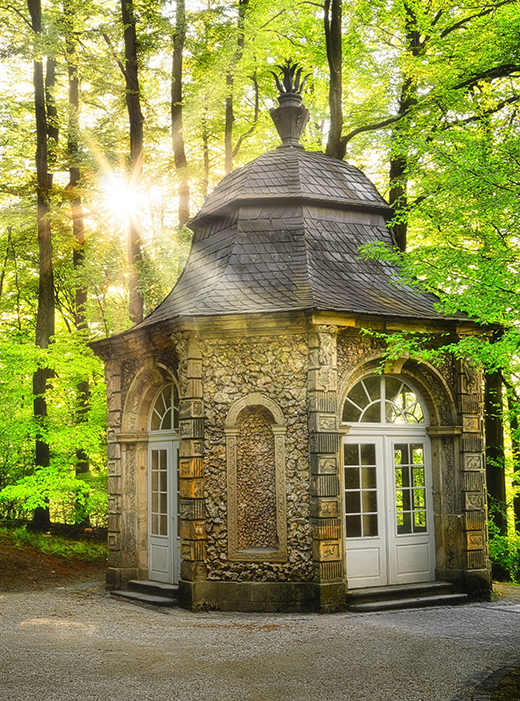
(Hermitage Birdhouse, Credits: Mikhail Butovskiy)
Fascinated by this unique complex, the margravine Wilhelmine immediately began its expansion with the addition of new rooms and an upper and lower grotto as well as the lavish gardens. In the sections added by Wilhelmine to the existing gardens, she introduced traditional baroque elements such as hedge gardens, pergolas and waterworks. The Hermitage is one of the most special and unique gardens of the 18th century and was created at a time when there were no gardens of this type at all in all of Germany.
Bayreuth boasts not one but two palaces. The old palace built in the 17th century was considered senescent and couldn’t handle the requirements of the court. In 1753 there was destruction by a terrible fire and it was then decided a new palace would be constructed. Once again, the Margravine Wilhelmine wielded her influence over her husband and gave her seal of approval to most of the designs.
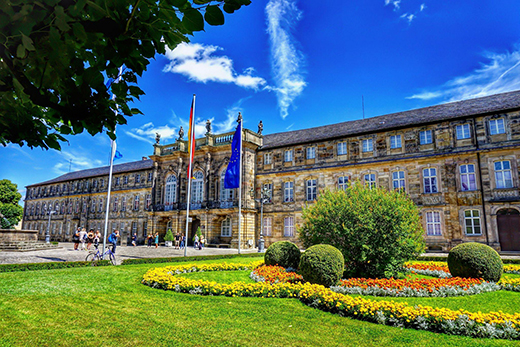
(The New Palace, Credits: Ramona Schirner)
The New Palace has beautifully decorated rooms filled with antique furniture, intricate wall paintings and delicate porcelain collected over centuries. Among these rooms are Margravine Wilhelmine’s music room, where she composed operas and her Chinese Mirror Cabinet covered entirely in mirrored glass. The most popular part of the palace is The Palm room, with its outstanding walnut wood panelling and gilded animal and palm motifs across the wall. It’s unique and till today, no one knows what influenced this room to be built in such a manner but it’s a fascinating room.

Stepping away from the old and into the new, Bayreuth isn’t just about old palaces and opera houses. Bayreuth today is dotted with trendy cafes and pubs which are an ode to their historical beer brewing heritage. Breweries in Bayreuth, like Maisel Brewery, have a rich lineage, with the fourth generation of the family continuing a local tradition. To learn more about Bayreuth and its love for Franconian beer, one can visit the Beer Museum at Maisel Brewery and do a walk through the brewery to learn more about the process of making this liquid gold. The tour culminates with a chilled glass of wheat brew and a hearty plate of German food – think sausages or roast pork at their restaurant – and you’ll feel like a Bayreuth local right at home!
Like most smaller towns in Germany, Bayreuth doesn’t clamour for attention. It almost never features on any tourist map but ends up being a warm embrace for an offbeat traveller. Whether you’re a culture vulture, history buff, music lover or culinary king, the city of Bayreuth will leave you pleasantly surprised, and you’ll find yourselflooking to revisit.
Cover Credits: City Church Towers, Mikhail Butovskiy